


Most branded merchandise is chosen in under 10 minutes
That is usually where it goes wrong.
A request comes in and someone is asked to “sort merch”. A few ideas get pulled together, something gets approved, and the order is placed.
It feels efficient, but choosing the right product is not a task. It is a decision.
Because the hardest part is not ordering the product. It is choosing the right one in the first place. Get this wrong, and you do not just choose the wrong product. You spend budget on something that will not be used.
Start with what it needs to do
Before you look at products, you need to answer one question.
What is this meant to achieve?
Not in general. Specifically.
- Is it meant to be kept?
- Is it meant to create a moment?
- Is it meant to be used every day?
- Is it meant to signal quality?
If you cannot answer this clearly, you are not choosing merchandise. You are guessing. And guessing is where budget gets wasted.
Once that is clear, the product choice becomes much simpler. You are no longer choosing from everything. You are choosing from what fits that purpose.
Match the product to behaviour
Most people choose merchandise based on what looks good. What matters is what people will actually do with it.
Most bad merchandise is not badly designed. It is just disconnected from real behaviour.
A better way to think about it is to ask:
- Where will this live?
- How often will it be used?
- Will someone carry it without thinking?
The more naturally it fits into someone’s routine, the more valuable it becomes.
For example, something carried daily will almost always outperform something used once, even if it is less visually striking.
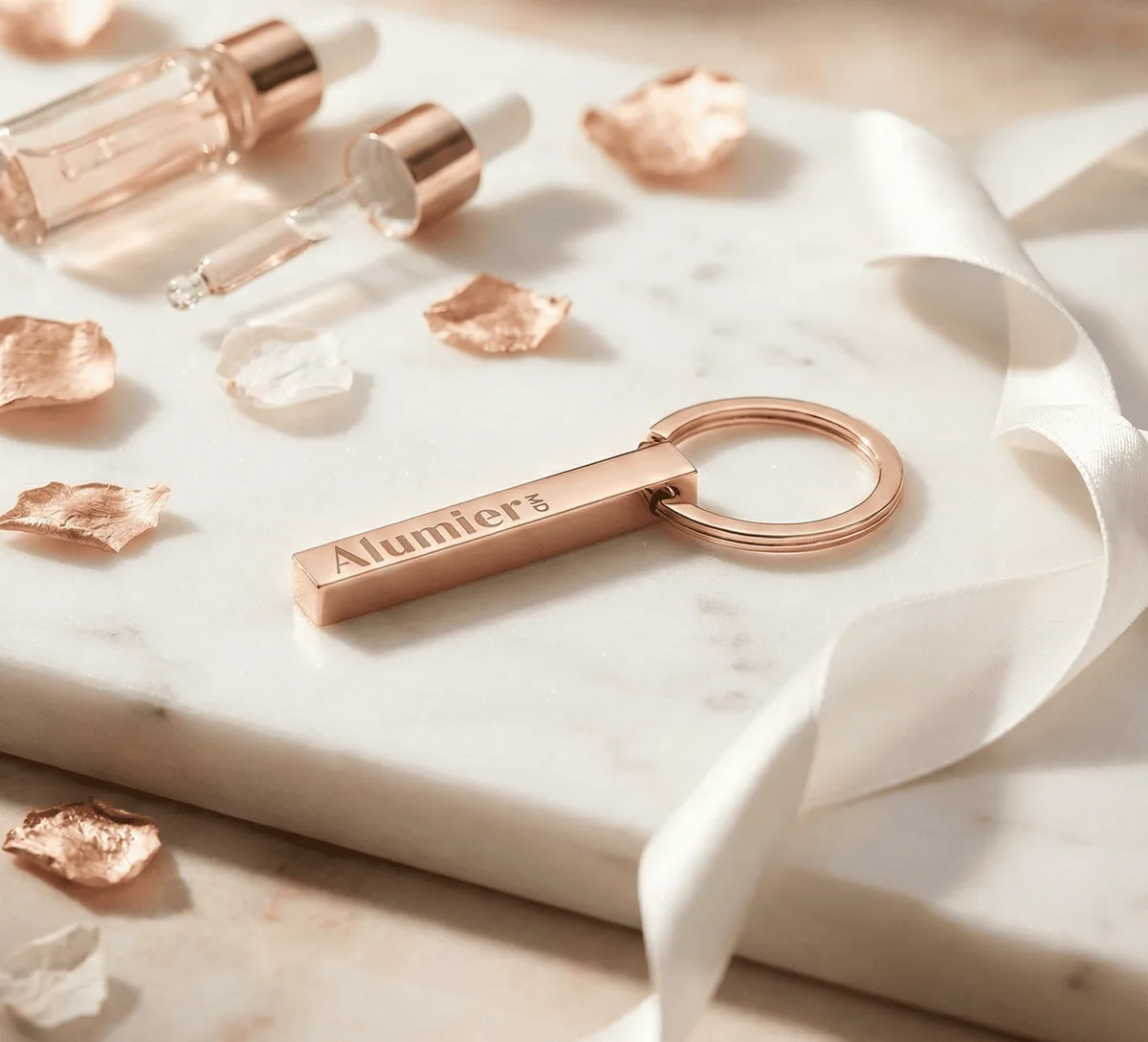
A simple product with a clear use case will almost always outperform something more complex with no defined role.
Look at something like this. It has a clear place in someone’s day, which is exactly why it works.
It is simple, easy to carry, and easy to justify keeping. That is what makes it effective over time.
Do not confuse visibility with effectiveness
There is a common assumption that merchandise needs to stand out. In reality, usefulness tends to matter more.
A loud product might get attention once. A useful product earns attention repeatedly.
Attention is easy to get once. Much harder to earn repeatedly.
Think in terms of lifespan
The longer something stays in use, the more value it delivers.
Instead of asking what looks good, ask how long this will stay in someone’s life.
That question tends to change what you choose.
Cost is not just about price
Cheap merchandise feels safe, until it gets ignored.
At the same time, not everything needs to be premium. What matters is alignment between the product, the purpose, and the audience.
When those three match, the budget works harder.
A simple way to choose
If you are deciding between options, use a simple test:
- Will this be used regularly?
- Does it have a clear place in someone’s day?
- Does it reflect the brand without forcing attention?
If the answer is yes to all three, you are usually on the right track.
Choosing the right merchandise is not about finding something impressive. It is about finding something that works.
If the product has a clear role, fits into real behaviour, and stays in use, it will do its job. If not, nothing about it will save it.